The Roaring Twenties was a decade of cultural change, jazz music, and bold self-expression. It also marked a major shift in menswear, moving away from rigid Victorian formality toward more relaxed yet elegant tailoring. This transformation created one of the most iconic eras in fashion history. At the center of this evolution was male fashion in the 1920s, which blended sophistication with comfort in a way that still inspires designers today.
At the center of this evolution was male fashion in the 1920s, which blended sophistication with comfort in a way that still inspires designers today. From tailored suits to distinctive accessories, this era defined what it meant to look like a modern gentleman. Influences from Hollywood, jazz clubs, and literary culture, including writers like F. Scott Fitzgerald, helped shape a style that still feels timeless.
What Was Male Fashion in the 1920s?
The rise of male fashion in the 1920s reflected a major cultural shift after World War I. Men began favoring softer tailoring, lighter fabrics, and more versatile outfits that worked across formal and casual settings.
The Jazz Age introduced a new sense of freedom, and fashion followed. Suits became less restrictive, trousers widened, and accessories became essential style elements. The influence of nightlife, speakeasies, and Hollywood icons helped popularize a sharper, more expressive masculine aesthetic.
This era also connected closely with entertainment culture, including films like The Great Gatsby, which visually reinforced the elegance of the decade.
The Key Characteristics of 1920s Men’s Fashion
1920s menswear had several defining features that made it instantly recognizable:
- Structured yet relaxed silhouettes
- High-waisted trousers with wide legs
- Layered clothing styles
- Emphasis on tailoring and proportion
- Strong use of accessories
The foundation of male fashion in the 1920s was balance. Outfits were formal enough for business yet flexible enough for social life. Fabrics like wool, tweed, and cotton were widely used, often in subtle patterns such as pinstripes or checks.
Essential Clothing Every 1920s Man Wore
Three-Piece Suits
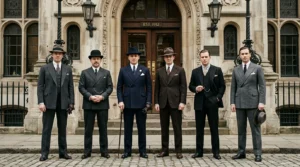
The three-piece suit dominated the decade. It included trousers, a matching jacket, and a waistcoat. This look became the symbol of elegance and professionalism.
Double-Breasted Jackets
These jackets added structure and authority to a man’s appearance, often worn by businessmen and wealthy gentlemen.
Oxford Bags Trousers
Wide-legged trousers known as Oxford bags became a youth fashion trend, especially among university students.
Shirts and Knitwear
Shirts often featured detachable collars, while sweaters and cardigans introduced a more relaxed weekend style.
Overcoats
Long wool overcoats were essential during colder months and added sophistication to any outfit.
1920s Accessories That Defined the Era
Accessories played a major role in completing outfits:
- Fedora hats and newsboy caps
- Suspenders instead of belts
- Pocket watches attached to waistcoats
- Bow ties and silk neckties
- Leather gloves and walking canes
These details helped refine the look of male fashion in the 1920s, making even simple outfits appear elegant and intentional.
Shoes and Footwear Trends in the 1920s
Footwear was just as important as clothing:
- Oxford leather shoes were the most common formal choice
- Two-tone spectator shoes became a fashionable statement
- Leather boots were popular for work and outdoor wear
Shoes often matched belts and accessories, maintaining a coordinated appearance.
Hairstyles and Grooming Trends
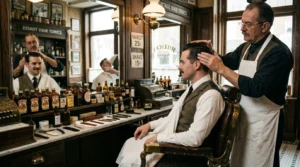
Grooming became a defining part of men’s style in this era. The most popular looks included slicked-back hair, side parts, and neatly trimmed mustaches. Hair products like pomade were widely used to maintain shine and hold. Barbershops also became cultural spaces where men discussed style, politics, and social life. This grooming culture helped reinforce the polished image associated with male fashion in the 1920s.
Casual vs Formal Fashion in the Roaring Twenties
Men dressed according to the occasion:
Business Wear
Business attire included tailored suits, ties, and polished shoes.
Evening Wear
Evening events demanded tuxedos or darker formal suits.
Casual Wear
Casual outfits included knit sweaters, softer trousers, and relaxed jackets.
Sportswear
Golf and tennis influenced lighter fabrics and more comfortable silhouettes.
Rich vs Working-Class Men’s Fashion
Fashion also reflected social class differences:
Upper Class
Wealthy men wore bespoke suits, silk accessories, and luxury fabrics.
Middle Class
Middle-class men focused on practical but stylish suits suitable for work.
Working Class
Durable clothing, simpler shirts, and functional footwear defined working-class fashion.
This contrast showed how male fashion in the 1920s adapted across society while maintaining a shared foundation of tailoring.
The Influence of Jazz, Hollywood, and Gangster Culture
Jazz music played a major role in shaping fashion trends, especially in nightlife scenes. Speakeasies introduced bold, expressive styles that broke traditional rules.
Hollywood actors like Rudolph Valentino influenced global menswear trends, while gangster figures such as Al Capone contributed to the sharp, powerful suit aesthetic often associated with the era.
This blend of entertainment and rebellion gave male fashion in the 1920s a unique cultural identity.
Seasonal Fashion Trends in the 1920s
Men adapted their clothing based on the weather:
Summer
Lightweight suits, linen shirts, and breathable fabrics.
Winter
Heavy wool coats, layered clothing, and gloves.
Spring and Autumn
Transition outfits included mixed fabrics and flexible layering.
Seasonal variation added depth to menswear choices.
How to Dress Like a 1920s Gentleman Today
Modern fashion still draws inspiration from this era. To recreate the look:
- Choose tailored suits with structured shoulders
- Add suspenders instead of belts
- Wear fedora hats for vintage appeal
- Use pocket watches or subtle accessories
- Mix vintage elements with modern fits
Many people recreate male fashion in the 1920s for Gatsby parties, weddings, and themed events, making it one of the most popular vintage styles today.
Common Mistakes in 1920s Style Recreation
Avoid these errors:
- Wearing costume-like outfits instead of real tailoring
- Ignoring proper fit and proportions
- Overusing accessories
- Mixing modern streetwear with vintage suits incorrectly
Authenticity is key to maintaining the elegance of the era.
Why 1920s Male Fashion Still Influences Modern Menswear
The legacy of this style continues today. Designers often revisit its structured tailoring and elegant simplicity. Modern trends like old money style, quiet luxury, and vintage tailoring all trace inspiration back to this decade. The timeless appeal of male fashion in the 1920s lies in its balance of sophistication and practicality. Even today, its influence appears in runway fashion, formalwear, and casual menswear collections.
FAQs
What did men wear in the 1920s?
Men wore suits, ties, hats, and polished shoes with structured tailoring.
Did men always wear hats?
Yes, hats like fedoras and caps were essential daily accessories.
What shoes were popular?
Oxford and two-tone shoes were the most common styles.
Can I wear 1920s style today?
Yes, modern adaptations are popular for events and fashion inspiration.
Was 1920s fashion formal?
It combined both formal elegance and emerging casual styles.
Conclusion
The Roaring Twenties remains one of the most influential periods in fashion history. Its emphasis on tailoring, grooming, and refined accessories created a lasting legacy that continues to inspire modern menswear. Today, designers and fashion enthusiasts still revisit male fashion in the 1920s for its balance of elegance, structure, and individuality. Whether for inspiration or recreation, its timeless appeal never fades.