Staring at outdated floral prints or fading geometric patterns can quickly make any room feel trapped in another decade. When you want a fresh look, stripping off every layer of paper often feels like an exhausting chore. This leads many homeowners to a practical question: can you paint over wallpaper?
The short answer is yes, you can paint over wallpaper without removing it. However, achieving a clean, durable finish depends heavily on the condition of your walls, the type of paper installed, and your preparation steps. Taking shortcuts without inspecting the surface can leave you with peeling edges, visible seams, or unsightly air pockets.
Quick Answer: Can You Paint Directly Over Wallpaper?
If you are looking for a fast solution, painting over existing wall coverings is often a great shortcut. It saves time, reduces mess, and protects delicate plaster or drywall underneath from damage during removal.
However, before picking up a roller, evaluate your walls using this simple breakdown:
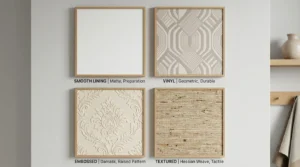
| Surface Condition | Recommended Action | Best Sealer / Primer Type |
| Firmly adhered, smooth lining paper | Safe to paint directly | Oil-based primer or stain-blocking sealer |
| Intact vinyl paper or bold patterns | Safe to paint with proper prep | Shellac or high-adhesion bonding primer |
| Embossed or textured wallpaper | Safe to paint (texture will remain) | Deep-pile roller with oil-based primer |
| Peeling edges, water damage, or mold | Remove paper completely | Do not paint; repair wall substrate |
The Decision Framework: Paint Over vs. Strip Wallpaper
Deciding whether to paint wallpaper or remove it comes down to a balance of time, wall condition, and long-term goals.
When It Is Safe to Paint Over Wallpaper
Painting is a reliable choice under specific conditions:
-
The paper is firmly bonded: Every edge, seam, and corner adheres tightly to the wall without lifting.
-
The underlying wall is fragile: In older homes, removing paper can pull away chunks of delicate plaster or tear drywall paper facing.
-
It is lining paper: Smooth lining paper provides an ideal surface designed for paint application.
-
You are dealing with a single layer: One intact layer of paper provides a stable foundation.
When You MUST Strip the Wallpaper First
In certain scenarios, painting over the surface will only cause bigger issues down the road:
-
The paper is peeling or curling: Paint adds weight and moisture, causing loose areas to pull away further.
-
There is water damage or mold: Moisture trapped under paper must be remediated. Painting over mold allows spores to grow undetected.
-
Multiple layers exist: Years of stacked paper create an unstable surface that can easily fail under a heavy coat of paint.
-
You have grasscloth, fabric-backed, or velvet flocking: These delicate materials absorb liquid unevenly and create a rough, messy finish.
Pros and Cons of Painting Over Wallpaper
The Pros:
-
Saves significant labor and removal time.
-
Prevents damage to fragile drywall paper or aging plaster.
-
Costs less in initial project tools and supplies.
The Cons:
-
Wallpaper seams can remain visible if not skim-coated properly.
-
Future wallpaper removal becomes far more difficult once painted over.
-
Incorrect primer choice can lead to wallpaper glue reactivation and bubbling.
The Science of Wallpaper Paint Failure
Understanding why DIY paint jobs fail helps you avoid common pitfalls. The primary culprit behind ruined surfaces is moisture interaction between your paint and the old adhesive underneath.
Why Water-Based Paints Cause Bubbling (Glue Reactivation)
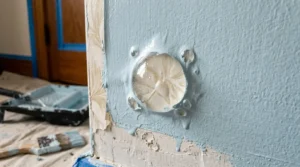
Most modern interior paints are latex or acrylic, meaning they are water-based. Old wallpaper paste is usually made from starch or cellulose materials that dissolve when exposed to moisture.
When you apply standard water-based primer on wallpaper, the paper absorbs liquid from the paint. This moisture seeps through to the old paste, softening the adhesive. As the glue loses its grip, large air pockets form, causing visible bubbling across the wall.
Oil-Based vs. Shellac vs. Water-Based Primers:
Selecting the best primer to paint over wallpaper is the single most critical decision in this process.
-
Oil-Based Primers (Top Pick): Oil-based formulas create an impermeable barrier. Because they contain no water, they seal the paper without reactivating underlying glue. They also block stubborn dyes and ink patterns from bleeding through your topcoat.
-
Shellac-Based Primers (Best for Heavy Stains): Shellac sealers dry rapidly and offer exceptional stain-blocking properties, making them ideal for dark patterns or vinyl surfaces.
-
Water-Based / Latex Primers (Avoid Direct Application): Using standard latex primer directly over paper risks reactivating glue and creating permanent bubbles.
How to Paint Over Wallpaper in 5 Steps
If your walls passed inspection, follow this step-by-step process to ensure a clean, professional result.
Step 1: Surface Preparation and Cleaning
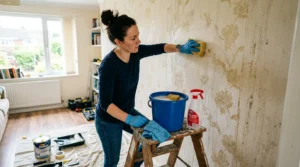
Over time, wall coverings accumulate dust, grease, and household grime that prevent paint from adhering.
-
Vacuum the walls using a soft brush attachment to remove loose dust.
-
Mix a gentle cleaning solution of warm water and sugar soap or trisodium phosphate powder.
-
Dampen a sponge with the solution, ensuring it is not dripping wet, and wipe down the surfaces carefully.
-
Allow the walls to dry completely before proceeding.
Step 2: Repairing Edges and Hiding Seams
Visible overlaps and loose edges are clear signs of painted paper. Hiding these flaws takes just a bit of extra effort.
-
Inspect every seam. Apply a small amount of seam repair adhesive under any lifting edges, press firmly, and wipe away excess glue.
-
To hide overlaps, apply a thin layer of joint compound over the seams using a putty knife.
-
Once the joint compound dries, sand it gently with fine-grit sandpaper until it feathers smoothly into the surrounding paper.
Step 3: Caulking the Perimeters
Gaps along the edges can compromise your finish over time. Apply a thin bead of paintable caulk along the baseboards, ceiling line, and vertical corners. Smooth the bead with a damp finger to create a seamless transition that seals out air and moisture.
Step 4: Applying the Sealing Primer Coat
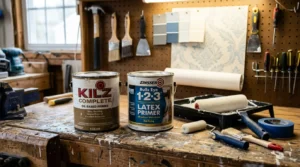
Now that repairs are complete, apply a full coat of oil-based primer for wallpaper.
-
Use an angled brush to cut in around corners, trim, and light sockets.
-
Roll the main sections using a medium-nap roller for smooth paper, or a deep-pile roller if you are painting over embossed wallpaper.
-
Allow the primer to dry thoroughly according to the manufacturer’s instructions, typically 6 to 8 hours.
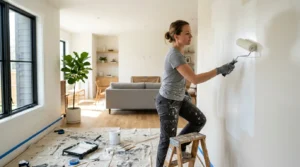
Step 5: Applying Topcoat Paint
Once the sealing coat has cured, you can apply your final paint finish.
-
Standard latex or acrylic topcoats are safe to use over an oil-based sealer.
-
Apply two light coats of paint using smooth, even strokes.
-
For optimal durability and easy cleaning, choose a satin, eggshell, or semi-gloss finish.
How to Handle Specific Wallpaper Types
Different materials require minor adjustments during surface prep to achieve full coverage.
Can You Paint Over Vinyl Wallpaper?
Vinyl coverings feature a slick, non-porous plastic coating that resists standard paint. To ensure proper adhesion, sand the vinyl surface lightly with medium-grit sandpaper to create a subtle texture. Wipe away the dust, then apply a high-adhesion shellac or specialty oil-based primer before painting.
Painting Over Textured or Embossed Wallpaper
When dealing with raised patterns, remember that paint will hide the color, not the texture. Embrace the decorative pattern as a textured wall design. Use a heavy-nap roller to drive paint into deep grooves and keep a small brush handy to touch up recessed areas.
Can You Paint Over Dark Patterns or Bold Prints?
Bold florals, dark backgrounds, and metallic accents often shine through standard paint. To neutralize dark colors, apply two coats of a dedicated stain-blocking primer before your topcoat. This saves you from applying four or five coats of expensive finish paint.
Special Room Cautions:
Applying paint over wall coverings in high-humidity areas requires extra care. Steam from showers can penetrate paint coats, softening old paste and lifting edges over time.
If you plan to complete this project in a bathroom or kitchen:
-
Ensure room ventilation is excellent during and after the project.
-
Seal every edge and seam carefully with joint compound and paintable caulk.
-
Use a moisture-resistant satin or semi-gloss topcoat that repels water droplets effectively.
Long-Term Consequences:
Before starting, consider future wall updates. Once you coat wallpaper in primer and paint, removing it later becomes significantly harder. Chemical steamers and wallpaper removal solutions rely on penetrating paper fibers to soften adhesive. A fresh coat of paint seals those fibers, turning future stripping into a painstaking scraping job that often requires replacing or repairing drywall.
FAQs
Will wallpaper seams show through paint?
If left untreated, wallpaper seams will likely show through paint coats. To make seams invisible, fill overlap edges with a thin coat of joint compound, let it dry, and sand it smooth prior to priming.
Can you paint over wallpaper with latex paint directly?
Applying latex paint directly onto wallpaper is risky. The water content in latex paint can dissolve old paste, leading to surface bubbling and peeling. Always apply an oil-based sealer coat first.
How do you fix air bubbles after painting over wallpaper?
If small bubbles appear while the paint is wet, they may settle flat as the coating dries. If bubbles remain after drying, slit the bubble with a utility knife, inject a tiny amount of wallpaper paste or seam adhesive inside, press it flat, and touch up the spot with primer and paint.
Final Verdict:
When your wall coverings are firmly attached and in solid condition, painting over them offers a fast, affordable way to refresh your room. By using an oil-based sealer, hiding seams with joint compound, and finishing with quality paint, you can achieve a clean, smooth wall without the hassle of stripping paper.