Choosing the perfect bridal accessories can feel overwhelming, but finding the right veil does not have to be complicated. Comparing different veil lengths helps frame your overall bridal silhouette, complements your gown, and adds a touch of magic to your wedding photos.
Bridal veils range from short 4-inch birdcage options to dramatic 120-inch cathedral trains. When evaluating veil lengths, always balance three main elements: your gown’s back details, your wedding venue environment, and your overall body proportions.
Standard Wedding Veil Lengths Chart
To help you visualize where each style falls on your body, use this quick reference chart of common veil lengths. Having exact measurements in mind makes shopping across different bridal brands simple and stress-free.
| Veil Length Category | Standard Length (Inches) | Standard Length (CM) | Typical Dropping Point | Best Suited Dress Styles |
| Birdcage / Blusher | 4″ – 22″ | 10 cm – 56 cm | Across the eyes or jawline | Vintage tea-length, city hall minis, modern jumpsuits |
| Shoulder / Flyaway | 20″ | 51 cm | Brushes top of shoulders | High-neck gowns, open-back dresses, heavy bodice detail |
| Elbow | 25″ – 30″ | 63 cm – 76 cm | Hits right at the elbow | Ball gowns, A-line skirts, dresses with skirt accents |
| Waist / Hip | 30″ – 36″ | 76 cm – 91 cm | Rests at natural waistline/hip | Sheath dresses, fit-and-flare styles, low-back gowns |
| Fingertip | 36″ – 42″ | 91 cm – 107 cm | Ends at extended fingertips | Universal match; pairs with almost every dress silhouette |
| Knee / Waltz / Ballet | 45″ – 60″ | 114 cm – 152 cm | Falls between knee and ankle | Column gowns, narrow A-lines, hassle-free dance wear |
| Floor Length | 72″ | 183 cm | Touches the floor flush | Dresses without a train, clean streamlined silhouettes |
| Chapel Length | 90″ | 228 cm | Extends slightly past dress train | Romantic A-lines, dresses with short or medium trains |
| Cathedral / Royal | 108″ – 120″+ | 274 cm – 305cm+ | Trails dramatically behind the dress | Formal church gowns, grand venue trains, dramatic aisles |
Short Veil Styles: Vintage Charm & Upper-Body Focus
Short veil options offer lightweight comfort, effortless charm, and easy movement throughout your wedding day.
Birdcage & Blusher Veils (4″ – 22″)
Originated in the 1940s, the birdcage veil is a short piece of netting or tulle that covers a portion of the bride’s face. It adds a lovely retro accent to short dresses or modern jumpsuits. A blusher veil style provides a tradition, falling over the face before being lifted during the ceremony.
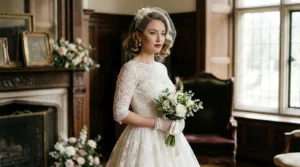
Shoulder / Flyaway Veils (20″)
Brushing right against the top of your shoulders, this airy style gives you a traditional bridal feeling without hiding low backs or intricate back lace.
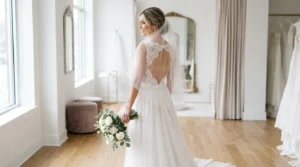
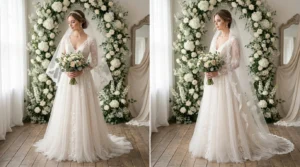
Elbow & Waist Veils (25″ – 30″)
An elbow-length veil extends down to your elbows, offering subtle shoulder coverage while keeping your dress skirt, train, and waistline completely visible.
Mid-Length Veil Styles: Versatile Elegance
When comparing mid-range veil lengths, these choices balance upper-body framing with grace, making them some of the most popular wedding veil styles for modern brides.
Fingertip Veils (36″ – 42″)
The fingertip veil length is widely considered the most versatile style available. Reaching the tips of your fingers when your arms hang naturally, this style flatters almost every bride and gown type without cluttering your dress train.
Knee & Waltz / Ballet Veils (45″ – 60″)
A waltz-length veil (also known as a ballet-length veil) falls between your knees and ankles. It gives you the graceful visual effect of a long veil while leaving your feet completely free, allowing you to walk, greet guests, and dance without tripping.
Long & Floor-Sweeping Veil Styles: Drama & Tradition
If you want a dramatic entrance down the aisle, floor-sweeping veil lengths offer undeniable romance and timeless beauty.
Floor-Length Veils (72″)
A floor-length veil matches the height of your dress, brushing the floor cleanly without leaving a trail behind you. It creates a sleek, unbroken vertical line that elongates your frame.
Chapel-Length Veils (90″)
A chapel-length veil extends about 6 to 12 inches past the end of your dress train, creating a soft pool of fabric that enhances your ceremony aisle walk.
Cathedral & Royal Veils (108″ – 120″+)
For the ultimate regal statement, cathedral veil lengths extend far past your dress train. These dramatic veils create showstopping ceremony photos in formal venues, cathedral aisles, and historic settings.
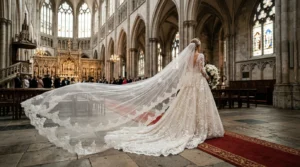
How to Match Your Veil Style to Your Dress Silhouette
When learning how to choose a wedding veil, pairing the fabric length with your gown’s structural shape is essential.
-
Ball Gowns & A-Line Dresses: Fingertip and cathedral options work best here. Short veils that end mid-skirt can break up the gown’s natural flare.
-
Mermaid & Trumpet Gowns: A fingertip or waltz option draws attention directly to the point where your skirt flares out, highlighting your curves.
-
Sheath & Column Dresses: Long floor-length or cathedral styles accentuate the sleek, linear design of modern sheath gowns.
-
Short & Tea-Length Dresses: Birdcage styles highlight the vintage aesthetic of shorter skirts, while a long cathedral option creates an editorial contrast.
How to Choose a Veil for Key Dress Back & Neckline Features
Your dress details should inform how sheer or long your veil should be:
-
Open Backs & Cutouts: Select sheer single-tier veil styles or pick a length that stops either above or well below the back cutouts so you do not obscure the design.
-
Heavily Embellished Skirts: If your gown features heavy lace trim or beadwork, opt for a raw-edge tulle veil that lets the dress details shine through.
-
Veil Width Options: Veils come in standard widths (usually 54″, 72″, or 108″ wide). Narrower widths hang straight down behind your shoulders, while 108″ widths wrap around your arms and create a dramatic, floating frame.
How to Measure Yourself for a Wedding Veil (Step-by-Step)
Calculating accurate veil lengths ensures your piece drapes properly over your gown. Follow these simple steps to calculate your custom measurement:
-
Identify Your Comb Anchor Point: Decide whether you plan to wear your hair up, down, or in a half-up style. Mark where the comb will sit on your head.
-
Put On Your Wedding Shoes: Heel height changes your overall height, which directly alters where floor-sweeping styles land.
-
Measure Down Your Back: Use a soft fabric tape measure starting from your comb placement point down your back to your desired endpoint (elbow, fingertips, floor, or train tip).
-
Apply the Train Rule: If you want a cathedral look, ensure your veil extends at least 6 to 12 inches beyond the edge of your dress train for the best visual appearance.
How Comb Placement & Hairstyle Alter Effective Length
Comb placement plays a massive role in how specific veil lengths land on your body:
-
High Hair Placement: Placing the comb at the crown of your head shortens the effective hang length by 2 to 4 inches.
-
Low Hair Placement: Securing the comb underneath a low bun adds drop length, pushing the veil fabric further down your back.
Always bring your veil to your bridal hair trials so your stylist can test different comb placements with your chosen hairstyle.
Choosing Your Veil Style by Venue & Environment
Your wedding venue should guide your fabric choices:
-
Outdoor & Beach Ceremonies: Ocean breezes and outdoor grass can snag long tulle. Fingertip or waltz options offer stress-free movement in wind and outdoor settings.
-
Cathedrals & Indoor Ballrooms: High ceilings and long carpeted aisles are tailor-made for trailing chapel and cathedral choices.
-
City Hall & Loft Spaces: Modern minimalist spaces pair wonderfully with birdcage pieces, shoulder-length cuts, or floor-length designs.
Height & Body Proportion Adjustments for Brides
-
Petite Brides: Long unbroken cathedral lines or soft fingertip styles elongate your body frame without cutting your silhouette in half.
-
Tall Brides: Always measure using a tape measure rather than relying on standard dress labels to make sure the fabric lands precisely at your fingertips, hips, or floor line.
Practical Day-of Guidance: Wearing, Photography & Care
Testing different veil lengths during your dress fittings will give you a clear idea of how your veil moves throughout the day.
-
Bustling vs. Detaching: Most brides wear long trailing veils for the ceremony and photos, then switch to a short veil or remove it entirely before the reception dinner and dancing.
-
Photography Tips: For wind-blown “floating veil” photos, assign a bridesmaid or wedding planner to lift and toss the veil while the photographer shoots.
-
Steam Out Wrinkles: Hang your veil in a warm, steamy bathroom a few days before the wedding to relax any packaging folds in the tulle naturally.
FAQs
What is the most popular wedding veil length?
The fingertip veil is the most popular choice among modern brides because it pairs comfortably with nearly every dress silhouette while allowing easy movement.
Can I wear a long cathedral veil with a short dress?
Yes! Pairing a long cathedral option with a short mini dress creates a chic, high-fashion editorial look that is very popular for contemporary weddings.
Should my veil be longer than my dress train?
If you are choosing a formal trailing style like a chapel or cathedral option, your veil should extend roughly 6 to 12 inches past your dress train so it lays flat on the floor.
When should I take off my veil on my wedding day?
Most brides keep their veil on through the ceremony, family portraits, and golden hour photos, taking it off right before entering the reception dinner or first dance.