People born in February claim a gorgeous purple gem that carries thousands of years of romantic history. Indeed, this winter month inspires heartfelt gestures and wishful fantasies. If you want to celebrate a birthday or anniversary this month, you need to understand the rich history of the february birthstone. This violet gemstone of February represents creativity, love, and beauty, which makes it a popular choice for fine jewelry like rings, necklaces, and earrings. Whether you are looking for a meaningful gift for a loved one or exploring your own personal history, this deep-dive guide covers everything you need to know about this magical crystal.
1. The Living History of the Violet February Birthstone
The fascinating story of the amethyst birthstone history Greek origin begins with the word amethystos. Consequently, the ancient Greeks defined this term as a guard against excessive inebriation or indulgence. Ancient civilizations deeply admired this unique gemstone because they believed the balancing prowess of the rock would keep them clear-headed. In fact, legends say that the Greek gods even preferred having their drinks in royal chalices embedded with amethyst stones to prevent intoxication.
Beyond the Mediterranean, this purple stone held a sacred place in ancient spiritual traditions. For example, pharaonic Egyptians carved it into protective amulets to shield the wearer from negative energy. Meanwhile, biblical texts describe it as the ninth stone in the High Priest’s breastplate.
During the Renaissance, the stone’s reputation shifted toward matters of the heart. As a result, people thought the gem could calm intense emotions in love. Royalty throughout history, including Catherine the Great of Russia and Wallis Simpson, the Duchess of Windsor, cherished this gemstone for its timeless beauty. They regularly wore it to project strength, confidence, and inner power.
Additionally, one popular legend links the gem directly to Saint Valentine. Historians say he wore a Saint Valentine amethyst ring engraved with Cupid as a symbol of pure love. Because of this beautiful narrative, amethyst remains the ultimate romantic gift for a February woman today.
2. Holistic Energy and Spiritual Meanings of the February Birthstone
In modern wellness circles, healers celebrate the amethyst crystal as a stone of calm and confidence. Many people use this crystal for calming the mind, reducing stress, and dispersing sadness or grief. Therefore, if you want to quiet the mind and reduce mental chatter, you should keep a geode in your living space. Furthermore, wearing it as daily jewelry can bring a feeling of safety and tranquility into your house.
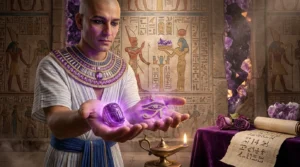
From an energy perspective, the healing properties of amethyst align closely with the upper chakras. Specifically, practitioners connect the stone to the third eye and crown chakra energy centers. These areas rule higher consciousness, intuition, and spiritual growth.
Furthermore, the stone helps moderate moods and quiet negative thoughts. Because of these qualities, Buddhists frequently use the gemstone in their meditative and prayer beads to attain a depth of tranquility during spiritual practices.
3. Astrological Alignments: Amethyst and February Zodiac Signs
In astrology, the february birthstone provides distinct benefits depending on your exact birthdate. For instance, those born under Aquarius rule the month until February 18. The gemstone encourages intellectual clarity for these individuals and inspires visionary thinking. Consequently, it helps them channel their big ideas into reality.
Alternatively, for those born under Pisces starting February 19, the purple birthstone aligns perfectly with their deep intuition, empathy, and emotional flow. The gem serves as a grounding force that protects sensitive Pisces personalities from absorbing the negative energy of those around them. Therefore, whether you are an Aquarius or a Pisces, this stone is a meaningful choice that honors your unique identity.
4. The Alternative February Birthstone Options: Beyond Amethyst
While amethyst is the official gemstone for the month, excellent historical and design alternatives exist for those seeking something different. The most notable alternative february birthstone is jasper. Known as a mystical calendar variant, jasper brings a grounding, earthy energy that symbolizes physical strength and stability.
Additionally, some jewelry lovers choose pink amethyst or prasiolite. Jewelers create prasiolite, a green variety, through careful heat treatment. As a result, buyers can enjoy the unique crystal structure of quartz while trying a completely different color palette.
5. The Science of the Stone: Volcanic Birth & Pleochroism
The formation of amethyst is a slow, natural process. This geological journey turns simple minerals into a gemstone steeped in history. It forms deep within the earth when silica-rich fluids fill gas cavities in cooling lava. Over millions of years, natural radiation and iron impurities give the quartz crystals their signature purple hue.
The color of this gemstone can range from the softest lavender and soft lilac, often marketed as Rose de France, to deep, velvety violet. Premium designers highly prize Siberian amethyst because it features a saturated purple with a beautiful balance of red and blue undertones.
This chemical makeup brings us to a fascinating scientific property called pleochroism. Depending on the iron content and how the lapidary cuts the crystal, an amethyst can show different flashes of red or blue under specific lighting conditions. For example, you will notice these shifts when moving from natural daylight to warm incandescent bulbs.
Today, Africa and South America provide most of the world’s supply. Miners unearth massive geodes filled with shimmering purple crystals in Brazil and Uruguay. Meanwhile, the famous Zambia mines produce a bright luster and an exceptionally deep february birthstone color.
6. Curating and Preserving Your Purple February Birthstone Jewelry
Amethyst ranks 7 on the Mohs hardness scale. Thus, it has a high rate of endurance and is durable enough for daily wear in rings, necklaces, and earrings. However, because it is slightly softer than diamonds, rubies, or sapphires, you must follow proper care and cleaning of the february birthstone to keep it sparkling for a long time.
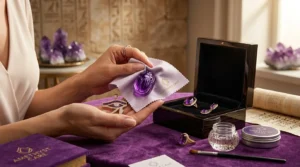
Furthermore, be aware that prolonged exposure to intense heat or direct sunlight can cause the purple color to fade over time. Sometimes, it even takes on a yellowish tinge. By keeping your jewelry away from harsh sunlight and storing it safely away from harder gems that could scratch its facets, your beautiful purple stone will retain its brilliant glow for generations.
Frequently Asked Questions About the February Birthstone
Is amethyst suitable for engagement rings?
Yes, you can wear amethyst in an engagement ring, but it requires a protective setting. Because it ranks 7 on the Mohs scale, it can scratch if it hits rough surfaces. Therefore, it is best to remove it during strenuous physical activities.
Does amethyst fade over time?
Yes, prolonged exposure to direct sunlight or high heat can cause the violet gemstone of February to lose its color saturation. To prevent this, you should store your pieces in a dark, soft-lined box when you are not wearing them.
What is the alternative birthstone for February?
The most common historical alternative is jasper, which represents grounding energy. For a modern twist, many people also look at green amethyst, which provides a fresh and contemporary aesthetic.
Why is the birthstone for February amethyst?
The connection dates back to ancient times when the stone was tied to St. Valentine and the Roman month of purification. Its symbolic attributes of protection, clarity, and pure love made it the perfect match for the qualities celebrated in February.