

In today’s competitive market, business growth strategies play a vital role in helping companies build strong foundations and achieve long-term success. This blog post will cover very basic and advanced essential matters regarding running a business. By the time of completion, the reader will have a well-rounded view of how to run the business and grow it.
Understanding Your Business Model
What is a Business Model?
A business model defines how your business operates, generates revenue, and delivers value to customers. It includes your target market, value proposition, revenue streams, and cost structure.
Types of Business Models
- B2B (Business to Business): This model refers to transactions between businesses. Companies sell products or services to other companies.
- B2C (Business to Consumer): In this model, businesses sell directly to consumers. Retail stores and e-commerce websites fall under this category.
- C2C or Consumer to Consumer: Transactions between two consumers, a platform that takes care of providing third-party channels, such as eBay or Craigslist.
- Subscription model: Customers subscribe for recurring access fees for a particular product or service, common within software and entertainment products.
Select Your Model
Before you define your business, there are several elements to consider concerning your target group and the value you provide them. Test which one best supports your goals or your customers.
Building a Strong Brand Identity
Importance of Brand Identity
A strong brand identity helps to differentiate my business from competitors. It creates a lasting impression on customers and fosters loyalty.

Key Elements of Brand Identity
- Logo: Your logo is a visual representation of your brand. It should be memorable and reflect your business values.
- Color Palette: Colors evoke emotions. Choose a color scheme that resonates with your target audience and is consistent across all platforms.
- Typography: The fonts used must resonate with your brand’s personality. Consistency in typography enhances brand recognition.
- Voice and Tone: The voice of the brand should be consistent through all communication, whether it is formal, informal, or playful, representing the brand identity.
Brand Style Guide
A brand style guide dictates how to apply your brand elements uniformly. It may contain logo use, color codes, typography, and tone of voice. All this will mean that anyone speaking on behalf of my business has to speak according to the same standard.
Business growth strategies
Overview of Digital Marketing
Digital marketing is a significant way of promoting my business in today’s online environment. It involves a range of channels
Search Engine Optimization (SEO)
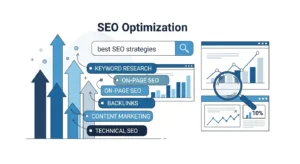
It is the process of optimizing your website to rank higher in search engine results, thus increasing visibility and traffic. Some of the key components include:
- Keyword Research: Identify relevant keywords and phrases that potential customers use when searching for your products or services.
- On-Page SEO: Optimize all your website content by targeting keywords in titles, headings, and meta descriptions.
- Off-Page SEO: The backlinking to high traffic sites is useful for a site to rank on google.
Content Marketing
It is a form of marketing that entails the creation of valuable content. This can include blogs, videos, podcasts, infographics, and much more. The idea is to provide useful information that positions my business as an industry leader.
Social Media Marketing
Social media is a very effective way of reaching out to customers. Here are some tips on how to use social media for effective marketing:
- Select the Right Platforms: Determine where your audience spends most of their time and focus on those platforms.
- Always respond to your audience.
- Interacting with customers promotes loyalty and generates word-of-mouth referrals.
- Create Shareable Content: The site can gain traffic on the google by good content.
Financial Management for Your Business
Importance of Financial Management
It is the heart of my business and will always ensure its survival. It simply entails planning, organizing, directing, and controlling the financial activities.
Main Essentials of Financial Management
- Budgeting: Develop a budget to manage income and expenditures. This makes for informed decisions about finances.
- Cash Flow Management: Keep tabs on cash flows to ensure liquidity to run or grow your business.
- Financial Analysis: Analyze financial statements constantly to evaluate your success.
Financial Management Tools
Some tools that aid financial management are:
- Accounting Software: Accounting processes can be simplified using accounting software such as QuickBooks or Xero.
- Budgeting Apps: Apps such as Mint or YNAB aid in proper personal and business finances management.
Customer Relationship Management (CRM)
What is CRM?
Customer Relationship Management (CRM) refers to the strategies and technologies that enable organisations to interact with customers effectively. A proper CRM system for business growth strategies improves the satisfaction of the customers as well as increases the retention levels of the customer base.
Advantages of CRM
- Improved Customer Insights: CRM systems collect enabling personalized marketing and communication.
- Enhanced Communication: Centralized customer information allows for seamless communication between teams.
- Increased Sales: Efficient lead management and follow-up processes can significantly boost sales and conversion rates.

Choosing the Right CRM System
When selecting a CRM system for my business growth strategies, consider the following factors:
- Ease of Use: The system should have an intuitive interface that team members can easily navigate.
- Integration Abilities: Ensure that the CRM integrates well with current systems and software.
- Scalability: Be sure to get a system that grows with the business.
Networking and Partnerships
Importance of Networking
Networking is the key to expansion, and networking with people within your industry. This can result in new business, partnerships, and referrals to your business.
Networking Strategies
- Industry Events: Go to conferences, trade shows, and seminars for your industry.
- Join Professional Organizations: Join industry organizations to connect with fellow professionals.
Building Strategic Partnerships
Partnering with other businesses can add value to your own, as well as increase visibility. Look for businesses with similar values and a similar target market.
Continuous Improvement and Adaptation
The business environment is constantly changing. My business must, therefore, be prepared to innovate and change. Accept change and embrace new ideas and technologies.
Continuous business growth strategies
- Collect Feedback: Regularly collect feedback from customers and employees to determine the areas of improvement.
- Industry Trend Monitoring: Stay updated on the trends in the market and new technologies that may influence your business.
- Invest in Employee Training: Provide for continuous learning and development to keep your team skilled and knowledgeable.
Conclusion
Running my business requires a multi-faceted approach that involves understanding my business model, using effective marketing strategies, managing finances, and nurturing customer relationships. By focusing on these key areas and being open to adaptation, you can set your business on the path to success.
So discussing these principles will not only make your operations better but will also have a lasting impact on your industry. Remember that the journey of my business is in progress, and success will be made through dedication, hard work, and a desire to learn.